
Building a High Performing DC Workforce - Part 1

The goal is to create a structured colleague experience from first contact to career progression.
In this blog series we’ll break down each stage and explore how distribution centers can build a sustainable workforce strategy.
Part 1 - The DC Employee Lifecycle: Why It Matters

- Matt Stonhouse, NXTLVL Consulting Group
It’s Not a Hiring Problem
Most distribution centers don’t struggle to hire.
They struggle to keep the people they hire.
On the surface, it looks like a recruiting issue. Job postings don’t convert, roles stay open, and new hires don’t stick. So the response is predictable: post more, hire faster, push harder.
But step back, and a different pattern appears.
Employees leave within the first few months. New hires take too long to reach productivity. Supervisors spend more time reacting than leading. And no matter how much hiring increases, stability never follows. These aren’t separate problems. They’re connected.
They point to one root cause: the workforce isn’t being managed as a system.
The System Most Operations Overlook
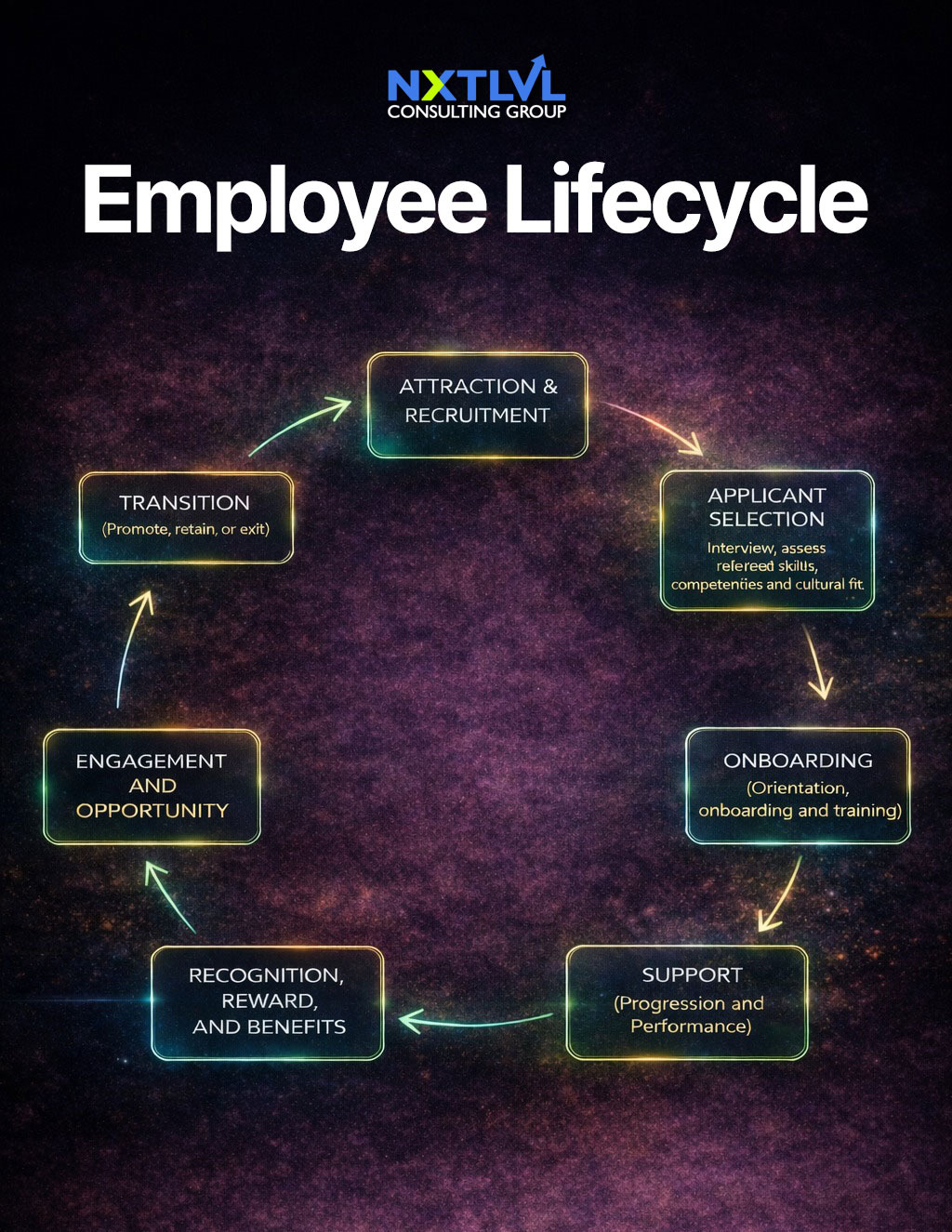
That system is the employee lifecycle.
It’s the full journey an employee takes, from first interaction to long-term contributor (or early exit). In a distribution environment, every stage matters.
What a candidate understands before accepting the job shapes whether they stay. How onboarding is structured determines how quickly they gain confidence. Training impacts not just productivity, but safety and quality.
When these stages aren’t intentionally designed, problems show up fast.
Where Things Break Down
Early turnover is usually the first signal. Many operations lose a large portion of new hires within 30 to 90 days, not because people can’t do the work, but because expectations weren’t clear, onboarding was inconsistent, and early support was limited.
At the same time, productivity lags. New hires take longer to ramp up, driving higher labor costs and putting pressure on experienced employees. Supervisors compensate instead of developing.
Then the cycle takes over.
Employees leave → hiring increases → onboarding gets rushed → more employees leave.
What looks like a staffing shortage is actually a system that never stabilizes.
What High-Performing DCs Do Differently
High-performing distribution centers don’t treat labor as a constant problem to fix.
They treat it as a system to design.
Instead of asking “How do we hire faster?” they ask:
“How do we build a workforce that stays, performs, and improves over time?”
That shift changes everything.
It starts before day one, with clear expectations about the role and environment. It continues with structured onboarding that builds confidence early, not just checks boxes.
Training is delivered in stages, not all at once, so employees actually retain and apply what they learn. And supervisors stay engaged during the first few weeks, when turnover risk is highest.
Over time, these operations give employees a reason to stay. Not always through formal career paths, but through consistency, recognition, and a clear link between performance and opportunity.
Why Data Matters
None of this works without visibility.
High-performing operations don’t just track hiring, they track what happens after. They look at where people leave, how long it takes to reach productivity, and what patterns exist across the lifecycle.
That’s what allows them to fix root causes instead of reacting to symptoms.
A Simple Way to Assess Your Operation
Start with one question:
Where are we losing people, and why?
Look at specific points:
- Before hiring
- During onboarding
- In the first 90 days
- After training
Most operations already have this data. The difference is whether they connect it.
Final Thought
The best distribution centers don’t win because they hire more people.
They win because they build a system that consistently turn new hires into capable, reliable, long-term contributors.
That system is the employee lifecycle.
Follow the link below to take your FREE ONBOARDING & TRAINING EFFECTIVENESS ASSESSMENT

NXTLVL Consulting Group helps distribution centers:
✔ Reduce turnover
✔ Improve hiring quality
✔ Accelerate productivity ramp-up
✔ Build high-performing workforce strategies
We're ready to assist
Edmonton Metropolitan Area - YEG
17 Royal Street
St. Albert, AB
T8N 7N8
+1 780 710 4823



NXTLVL Consulting Group © 2024-2026